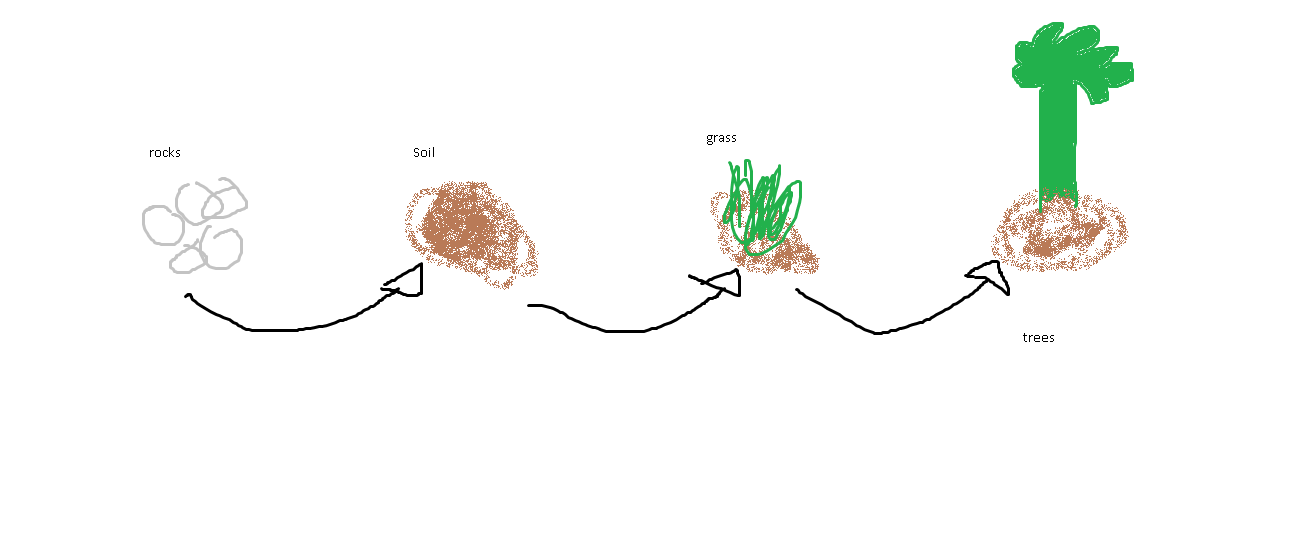
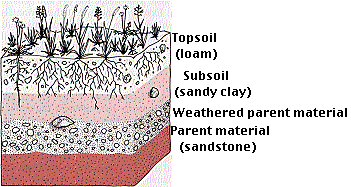
Topsoil The very top layer consists of partially decayed organic debris like leaves. A soil profile characteristic of the plains states. The rainfall is so light that minerals in the soil are seldom carried below the subsoil. Beneath this is the topsoil. This horizon is usually dark in color because of humus — partially decayed organic matter — which has been incorporated in it from above. Humus gives the soil a loose texture that holds water and allows air to diffuse through it. Oxygen is essential to permit cellular respiration in plant roots, decay organisms, and other inhabitants of the soil. Subsoil The subsoil is usually lighter in color that topsoil and often contains an accumulation of inorganic nutrients. Weathered parent material This represents the first steps in the chemical breakdown of rock into soil. Often the weathered parent material is underlain by the parent material itself, although in some places it has been carried from another location by wind, water, or glaciers. Parent material The chemical nature of the parent material, whether granite, limestone, or sandstone, for example, has a great influence on the fertility of the soil derived from it.
|  |